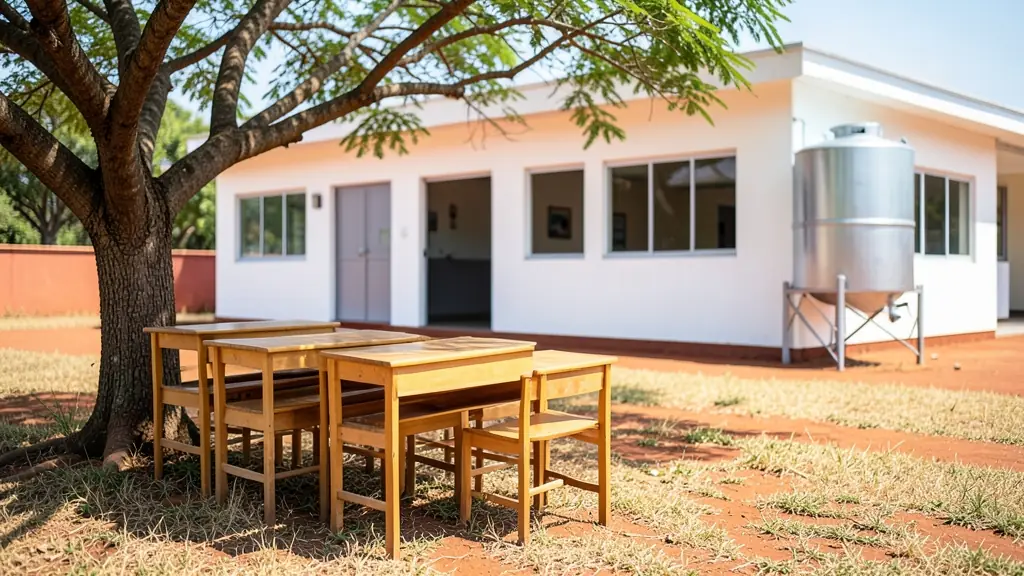
Socio-economic development (SED) is the smallest element on the generic B-BBEE scorecard at 5 points, with a target of about 1% of net profit after tax. It counts contributions to projects that help black people outside your business: schools, clinics, food schemes, bursaries and community projects. Because it is spend you fully control, it is one of the more predictable elements to score, as long as the beneficiaries qualify and the proof is in order. One request reaches consultants, SED providers and agencies who quote you directly.
Who counts as a beneficiary
SED must benefit black people, and in most cases at least 75% of a project's beneficiaries must be black for the full contribution to count. Where fewer are, only part may be recognised. Ask the agency how it will treat mixed projects, and ask beneficiary organisations for a breakdown of who they serve. Contributions to your own employees, their families or your own business do not count as SED: those belong to skills development or are simply staff benefits. A project in a township or rural area where the people served are clearly black is usually simple to evidence; a citywide charity serving everyone needs more paperwork.
Kinds of project
- Bursaries and school support outside your own workforce.
- Equipment, books, food or building work for schools, crèches and clinics.
- Food schemes, community gardens and feeding programmes.
- Community health, sport and youth projects.
- Contributions in kind, such as goods or professional services, valued fairly.
Many firms give through non-profit organisations (NPOs) and public benefit organisations (PBOs), which know the community and can report on results. Near mines, farms and energy projects, SED often goes to the surrounding communities.
Proof, tax receipts and volunteering
Keep the agreement or letter, proof of payment or delivery, the beneficiary organisation's registration details and a breakdown of beneficiaries. Photographs and short reports help. A donation to an approved PBO may come with a Section 18A receipt, which can make it tax deductible within limits; that is a tax matter, so confirm it with a tax practitioner. Some firms add staff volunteering; ask the agency whether and how time can be valued before you count it.
Getting more from the same rand
A steady relationship with a few well-run projects usually beats many small one-off gifts: the evidence is easier and the impact is clearer. If you also run bursaries or community training, check whether they fit better under skills development or ESD, which carry more points. A gap analysis shows where each rand scores best on your scorecard. Spread payments through the year rather than rushing them in the last month: a late payment that lands after your financial year end falls into the next measurement period.
What to put in your request
- Your net profit after tax for the year
- The kind of projects or communities you want to support
- Any NPOs or PBOs you already give to
- Whether you want a provider to manage the projects
- Your financial year end and next verification date
Socio-Economic Development (SED) for small firms, contractors, factories, farms and more
- Small businesses and start-ups: growing firms making their first planned community contributions with proper records
- Contractors and built environment firms: contractors supporting schools and community projects near their sites
- Factories and engineering works: factories funding schools, clinics and food schemes in nearby townships
- Mines and mining suppliers: mining suppliers adding to community projects around the mines they serve
- Retailers, wholesalers and distributors: retailers donating food and goods to registered community organisations
- Professional, ICT and financial firms: professional firms giving bursaries and pro bono services to NPOs
- Transport, logistics and service contractors: logistics firms supporting road safety and youth projects in their areas
- Farms, packhouses and agri-processors: farms and packhouses funding crèches, schools and clinics for farm communities
- Hotels, lodges and tour operators: lodges supporting schools and conservation projects in nearby villages
Frequently asked questions
Do you choose projects or verify SED spend?
Is SED a priority element?
Can we count donations to a church or sports club?
What if we have no profit this year?
Socio-Economic Development (SED) by province and city
- Johannesburg
- Pretoria
- Centurion
- Midrand
- Sandton
- Randburg
- Roodepoort
- Krugersdorp
- Randfontein
- Germiston
- Boksburg
- Benoni
- Kempton Park
- Alberton
- Vanderbijlpark
- Vereeniging
- Durban
- Pinetown
- Pietermaritzburg
- Richards Bay
- Newcastle
- Ladysmith
- Gqeberha (Port Elizabeth)
- East London
- Kariega (Uitenhage)
- Mthatha
- Cape Town
- Bellville
- Paarl
- Stellenbosch
- George
- Worcester
- eMalahleni (Witbank)
- Middelburg
- Secunda
- Mbombela (Nelspruit)
- Rustenburg
- Brits
- Klerksdorp
- Potchefstroom
- Mahikeng
- Polokwane
- Tzaneen
- Kimberley
- Upington
- Bloemfontein
- Welkom
- Sasolburg