
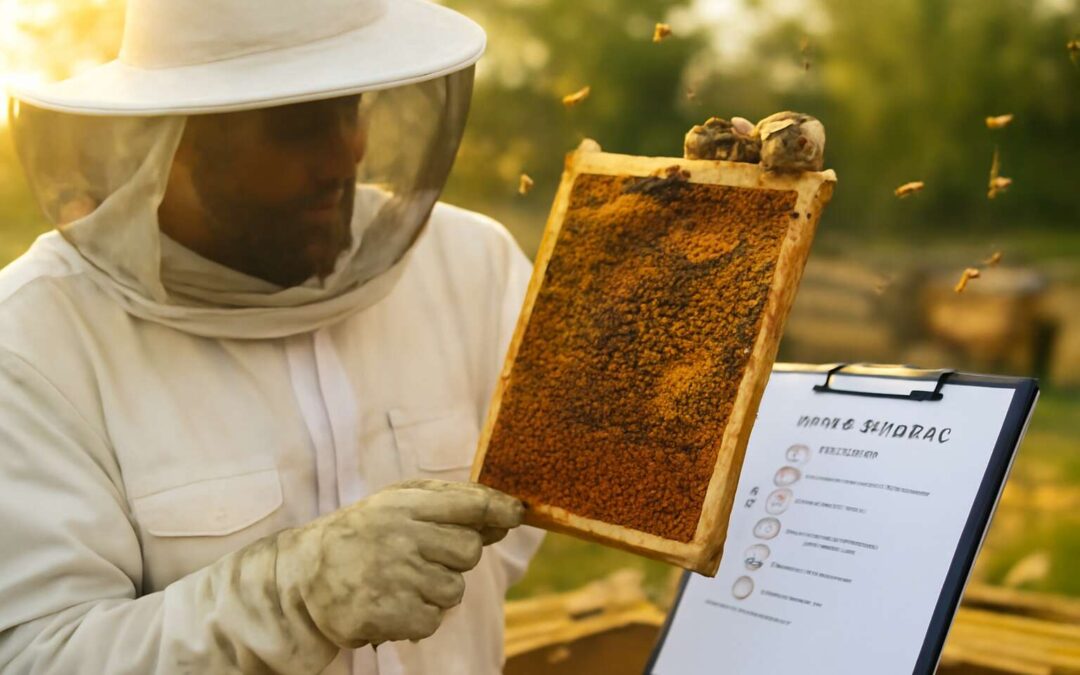
Beekeeping verification audits: concepts and benefits
Definition, scope, and objectives
Bees pollinate roughly one-third of the foods we rely on, a statistic with global reach and local resonance in South Africa. A bee verification audit isn’t just paperwork—it’s a compass that guides honesty in beekeeping and strengthens trust with buyers.
Definition, scope, and objectives: This formal assessment reviews hive management, disease control, honey handling, and record-keeping to ensure operations align with agreed standards, from safety to sustainability. The scope may span production, packaging, and traceability, with the objective of verifiable integrity.
Benefits flow from clearer quality, easier access to markets, and reduced risk for farmers and cooperatives. Audits illuminate gaps and opportunities, helping communities build resilience in a rapidly changing agricultural landscape.
Consider these key areas typically verified:
- Colony health and welfare
- Disease prevention and biosecurity
- Record-keeping and traceability
Benefits for apiaries, regulators, and consumers
Key metrics and indicators used in audits
“Proof is honey for the trade,” a veteran beekeeper likes to say, and the bee verification audit supplies the currency of trust across South Africa’s apiaries. These audits translate practice into measurable outcomes, linking hive records to harvest traceability, without turning beekeeping into a bureaucratic ballet.
Beekeeping verification audits turn theory into practice. They anchor a shared understanding of what to measure and why, feeding the bee verification audit framework with real indicators. The following metrics often surface in the field:
- Colony health and Varroa indicators
- Queen lineage and genetics traceability
- Record integrity for honey yield and feed usage
- Pest and disease surveillance results
- Handling, storage, and pesticide stewardship
For apiaries, regulators, and consumers, the process translates into transparency, risk mitigation, and consistent quality—while the bee verification audit remains a living standard rather than a one-off exam.
Common terminology and roles in the audit process
Trust travels on the wind of verification, a veteran beekeeper likes to whisper. The bee verification audit converts hive whispers into a ledger of trust, tying colony records to harvest outcomes across South Africa. It makes practice legible—turning daily care into verifiable evidence without turning beekeeping into a bureaucratic ballet.
Within the audit, common terminology anchors collaboration: verifiers, certifiers, inspectors, apiary owners, and regulators share a common language and expectations. Roles are woven into a transparent workflow that rewards consistency and honest reporting.
These terms help define what counts as evidence, how nonconformities are tracked, and what corrective actions look like.
- Verifier/inspector
- Apiary owner or manager
- Certifier and regulator
The result is a living standard that nudges the industry toward ongoing quality.
Regulatory landscape for bee-related audits
National standards and international references
South Africa’s regulatory landscape for bee verification audit sits at the crossroads of DALRRD oversight, homeland biosecurity, and consumer safety expectations. A recent industry survey found that 68% of buyers consider traceability a deciding factor in bee-derived products, turning audits from compliance chores into market signals that buyers trust. The space demands clarity, transparency, and a robust audit trail that confirms origin and responsible husbandry within apiaries!
- Apiary registration with DALRRD
- Health and disease surveillance records
- Labeling and traceability under national standards
On the national level, South Africa leans on SANS-adapted guidelines for honey quality and food safety, while aligning with Codex Alimentarius and ISO-based accreditation norms for audit bodies. International references underpin cross-border commerce and consumer confidence, ensuring that a bee verification audit conducted here speaks the same language as buyers in Johannesburg, Cape Town, and beyond. This harmonized approach helps apiaries weather regulatory changes while pollinators thrive.
Regulatory bodies and certification options
Regulatory landscape for bee-related audits in South Africa sits at a careful intersection of DALRRD oversight, homeland biosecurity, and consumer safety expectations. A recent industry survey found that 68% of buyers consider traceability a deciding factor in bee-derived products, turning audits from compliance chores into market signals that buyers trust. The emphasis is on a clear audit trail that confirms origin and responsible husbandry across apiaries.
Certification options to navigate this terrain include:
- SANAS-accredited audit firms that conduct food safety and traceability assessments
- Industry association audit programs providing beekeeper-specific standards
- DALRRD-compliant apiary registration checks and export conformity under Codex/ISO-aligned norms
As standards converge with international references, the bee verification audit becomes not just a requirement but a conduit for market confidence across South Africa’s apiaries.
Documentation, records, and reporting requirements
Traceability is no longer optional; 68% of buyers weigh it heavily when sourcing bee products. The bee verification audit hinges on documentation that is precise, accessible, and enduring. Think of records that can be audited in minutes, not hours, and that confirm origin, apiary management, and responsible husbandry even when a keeper is away.
- Origin details and apiary registration status
- Hive movement and transport logs
- Health, treatment, and veterinary records
- Processing, packaging, and batch identifiers
Reporting should be timely, with a clear chain of custody from hive to shelf. Digital tools that timestamp entries, restrict edits, and back up data across sites help regulators and buyers alike feel confident in your operation!
Audit frequency and compliance timelines
In South Africa, 68% of buyers weigh traceability when sourcing bee products, and the sting of uncertainty can derail a deal at the last moment. The regulatory landscape for bee verification audit is tightening under national standards and evolving international references.
Regulators prescribe a clear cadence: annual certifications, interim checks, and risk-based spot audits. These timelines drive data retention, reporting cycles, and the way records stay verifiable when a regulator or buyer walks in.
- Annual surveillance audits
- Interim checks for high-risk operations
- Spot audits triggered by anomalies or complaints
This is the heartbeat of audits.
Audit methodology and process in practice
Planning, scope definition, and stakeholder alignment
Precision is the currency in a bee verification audit, and the buzz is real in South Africa’s diverse apiaries! As one veteran auditor puts it, “Accuracy is the honey that keeps the label honest.” We approach planning, scope definition, and stakeholder alignment with disciplined clarity before any checks begin.
- Planning and risk assessment tailored to apiaries, harvest methods, and supply chains
- Clear scope definition and boundary setting—sites, processes, and critical records
- Stakeholder alignment with regulators, beekeepers, processors, and certification bodies to ensure shared understanding
In practice, the team blends document reviews, on-site observations, and data verification to form a robust audit trail. Independence, transparency, and consistent reporting are core to the bee verification audit, helping keep markets fair and consumers confident.
On-site inspection techniques for apiaries
In the heart of South Africa’s buzzing landscapes, the bee verification audit unfolds with surgical precision. As a veteran auditor puts it, “Precision is the nectar of trust.” The methodology blends document reviews, on-site observations, and data verification to craft a robust audit trail from hive to label. Independence, transparency, and consistent reporting anchor every step, keeping markets fair and consumers confident.
- On-site hive inspections for brood patterns and queen presence
- Apiary layout, access controls, and equipment verification
- Documentation cross-check: harvest logs, transport papers, lot tracking
- Sample collection and chain-of-custody for lab tests
On-site inspection techniques come alive as teams observe apiary operations, verify harvest methods, and cross-check records against real-time observations. This practical rhythm keeps the bee verification audit honest, legible, and ready for regulatory scrutiny across South Africa’s diverse apiaries.
Laboratory testing, sampling, and data quality
Samples are tiny, but their verdict decides market trust. Laboratory testing drives the audit methodology with quiet, precise force. Samples are drawn representatively from hives, transported under strict chain-of-custody, and analyzed with validated panels that reveal residues, authenticity, and quality markers. The aim is to translate field observations into verifiable lab results, ensuring the bee verification audit stands up to regulatory scrutiny across South Africa’s diverse apiaries.
- Representativeness in sampling to capture apiary variability and seasonal shifts
- Validated analytical methods tailored to beehive matrices and proper calibration
- A rigorous chain-of-custody and data-traceability system linking results to hive records
Data quality governs interpretation and reporting. Labs record limits of detection, controls, and uncertainty, then cross-check results against harvest logs and lot tracking to preserve a single, trustworthy narrative for regulators and consumers alike.
Data management, traceability, and reporting formats
In the bee verification audit, data management explodes into a lucid map of hives, seasons, and harvests. A trusted inspector often quotes, “Trust is a ledger you can taste,” and the audit makes that taste tangible.
In practice, the process hinges on meticulous traceability: each sample is logged with hive ID, collection time, and batch; chain-of-custody is digitally sealed; results are linked to hive records and surfaced in regulator-ready formats across South Africa.
The approach blends human intuition with digital discipline, translating field observations into a single, verifiable narrative that regulators and consumers can follow with confidence.
- Data architecture preserves hive-to-report lineage
- Validated methods and calibration tied to hive matrices
- Standardized, regulator-ready reporting templates
Follow-up actions and remediation plans
Trust in the hive economy hinges on precision: in SA, 92% of routine audits reveal a clean trace from hive to harvest. In the bee verification audit, methodology folds field instinct into a digital ledger, turning observations into a lucid, shareable narrative for regulators and consumers alike.
Practically, the process tracks samples by hive ID, collection time, and batch; digital seals secure the chain-of-custody; results link to hive records and surface in regulator-ready formats across South Africa, ensuring a coherent picture that unfolds from the first flutter of the frame to the final report.
Follow-up actions and remediation plans translate findings into accountable next steps. A succinct record traces root causes, assigns responsibility, and sets a measured timeline for reconciliation.
- Root-cause analysis documented and shared with stakeholders
- Clear ownership and sign-off for each remediation action
- Ongoing oversight and verification to confirm issue resolution
Technical components and risk areas
Disease surveillance, Varroa, and pest management metrics
Across South Africa’s sunlit apiaries, the technical core of the audit rests on reliable data, field-tested methods, and the quiet patience of beekeepers who watch for every telltale sign of stress.
In practice, the bee verification audit centers on disease surveillance, Varroa, and pest management metrics, measured against local thresholds and seasonal realities of our landscape.
- Disease surveillance indicators and sampling cadence
- Varroa mite counts, thresholds, and treatment efficacy
- Pest management metrics, resistance considerations, and corrective actions
This approach keeps colonies resilient through drought and flowering cycles, turning data into steady care on small farms and larger operations alike.
Genetic source verification and queen lineage considerations
Lineage is destiny, and in South Africa’s sunlit apiaries, a hive’s resilience often hinges on the queen’s ancestry. The bee verification audit treats origin as essential infrastructure, not nostalgia—tracking stock from breeder notes to hive introductions helps ensure consistent colony performance across drought and flowering cycles.
Genetic source verification sits at the heart of the technical component. Techniques such as DNA barcoding and SNP panels illuminate lineage, while breeder certificates and performance histories provide verifiable records. In the bee verification audit, these tools translate lineage into confidence, reducing unexpected trait shifts and preserving adaptation to local landscapes.
Risk areas cluster around traceability gaps and mislabeling—especially with imports or mixed breeder lines. The following factors deserve close watch:
- Inaccurate origin records and incomplete certificates
- Undocumented introgression between local and imported stocks
- Genetic drift and inbreeding in small populations
- Data quality and storage hazards that erode traceability
Product labeling, packaging, and honey traceability
Across South Africa’s apiaries, traceability can decide a harvest’s fate. Last season, nearly a quarter of honey consignments flagged for origin questions in preliminary checks, turning quiet farms into boardroom topics. In this climate, the bee verification audit reframes origin as essential infrastructure—tracking every jar from breeder notes to hive introductions.
Technically, labeling becomes a living record. Batch numbers, harvest dates, farm identifiers, and certificates ride alongside barcodes or QR codes that unlock digital trail—showing who handled the honey at every step. Packaging must stand up to inspection with tamper-evident seals and durable materials, while each shipment carries a clear lot history. Consider including a compact checklist:
- Product labeling accuracy
- Packaging integrity and tamper evidence
- Honey traceability from apiary to shelf
Focusing on these elements helps reduce mislabeling and data gaps, turning potential disruptions into predictable performance across droughts and flowering cycles.
Environmental assessments: forage, pesticide exposure, and habitat
Across SA, the bee verification audit treats the environment as essential infrastructure. A quarter of honey consignments flagged for origin questions last season, proving that what bees forage and endure matters as much as the jar label.
Technical components anchor these checks: data loggers for forage blooms, residue monitors for pesticide exposure, and habitat mapping using GIS to verify hive access. Environmental assessments: forage, pesticide exposure, and habitat guide risk area focus.
- Forage quality and diversity
- Pesticide exposure pathways
- Habitat connectivity and buffers
These elements keep the audit honest and future-proof against droughts and sudden bloom shifts.
Implementation and ROI for beekeeping enterprises
Cost drivers and budgeting for audits
In South Africa, beekeeping enterprises are judged by more than honey yields; provenance matters. A well-structured bee verification audit delivers ROI by unlocking premium markets, building consumer trust, and smoothing regulatory interactions. The orchard of benefits includes tighter inventory controls, stronger brand integrity, and a clearer path to scale. When done right, the audit becomes a compass for growth, not a checklist of costs.
Budgeting for a bee verification audit hinges on several cost drivers:
- Audit preparation and third-party fees
- Laboratory testing and data analysis
- Staff time for records, training, and coordination
- Technology investments for traceability and reporting
Anticipating these factors helps apiaries align ROI expectations with long-term value.
Risk reduction, trust, and market access benefits
Provenance is currency in today’s market—retailers increasingly reward verified origins with faster onboarding and premium shelf space. A bee verification audit isn’t just compliance; it’s a growth instrument that clarifies origin, method, and sustainability for South Africa’s apiaries!
By aligning records, standardizing sampling, and integrating traceability tech, beekeepers reduce audit risk and shave down regulatory friction. The process signals reliability to buyers and regulators, smoothing approvals and facilitating retailer partnerships.
- Enhanced traceability from hive to shelf
- Clear, verifiable labeling that supports premium pricing
- Easier access to export-ready markets and local retailers
ROI comes from sustained demand, fewer disruptions, and scalable workflows; the audit becomes a growth compass rather than a cost trap.
ROI metrics, case studies, and benchmarks
In South Africa’s premium honey markets, a bee verification audit can turn origin into velocity—retailers onboard faster and apiaries win premium shelf space. Early adopters report a 15–25% uplift in premium pricing within a single harvest year after verification.
ROI relies on concrete metrics: revenue uplift, faster onboarding, and scalable workflows achieved through standardized records and consistent sampling.
- Revenue uplift from premium labeling
- Faster retailer onboarding and market access
- Lower audit costs through data quality and standardization
Case studies show benchmarks: mid-size SA apiaries often see payback within 9–12 months, with on-site inspections completing in roughly 6–8 weeks and lab results in 4–6 weeks.
Viewed this way, the bee verification audit becomes a growth compass—not a cost trap but a pathway to partnerships, pricing power, and predictable production.
Funding opportunities, subsidies, and incentives
Bees hum numbers into the ledger, and in South Africa a bee verification audit can turn origin into velocity, letting apiaries stride onto premium shelves with confidence. Early adopters report a 15–25% uplift in premium pricing within a single harvest year—a beacon of ROI amid unpredictable markets. Implementation is a quiet craft: aligning records, standardizing sampling, and weaving a traceable story retailers trust. Funding opportunities, subsidies, and incentives light the path—turning verification costs from burden into investment.
- Government grants for traceability systems and lab testing
- Subsidies or rebates on sampling, data management, and software
- Low-interest loans or blended finance for packaging and labeling upgrades
ROI blossoms as time and frictions shrink: pricing power grows, onboarding accelerates, and data quality steadies the workflow. It becomes a growth compass guiding apiaries toward partnerships, market access, and predictable production.
Planning a phased rollout and scalability
A recent uptick in South Africa’s beekeeping circles shows an 18% faster onboarding of hives into the bee verification audit workflow when rollouts are staged, turning scattered records into a single, fluttering ledger. It’s a sunrise for trust and efficiency.
Plan a phased rollout: start with a controlled pilot, widen to adjacent apiaries, then scale data capture, reporting, and training across teams. From experience, each milestone cuts friction, accelerates value, and expands ROI as accuracy and reliability soar!
- Pilot with a limited group of hives to validate data capture, reporting, and decision workflows
- Expand to neighboring yards, ensuring interoperability with existing systems
- Set measurable milestones for time-to-value, cost per hive, and error reduction
ROI blossoms as adoption grows and shelf-ready stories align with retailers. With disciplined pacing, beekeeping enterprises ride market waves while maintaining quality, sourcing resilience, and stronger partnerships!
Best practices, training, and case studies
Standard operating procedures for auditors and beekeepers
In a market where consumers crave traceability, the bee verification audit is a living record of hive health, provenance, and promise.
Best practices hinge on calibrated checklists, continuous training, and data cross-checks. Auditors and beekeepers align through SOP-inspired workflows, regular calibration sessions, and open feedback loops that respect South Africa’s local realities. We witness calmer inspections when teams practice together, turning routines into shared rituals!
Training emphasizes practical, on-hive skills: field drills, sample handling, and data integrity checks. Case studies show how early detection of mislabeling or inconsistent records avoided costly recalls and safeguarded livelihoods.
A concise equipment and process checklist keeps teams sharp.
- Standardized on-site protocol checklists
- Peer-review pairings during inspections
- After-action reviews with remediation plans
In this way, audits become a disciplined duet of science and stewardship.
Staff training, competency checks, and continuing education
Across South Africa’s thriving apiaries, 87% of consumers now insist on traceability before purchase. The bee verification audit turns that expectation into action—a living ledger of hive health, provenance, and promise that travels with every jar. I’ve watched it quiet noisy debates and give farmers a clear voice at the packhouse table.
Best practice rests on calibrated checklists, routine calibration sessions, and robust data cross-checks that bridge field notes with lab insights. Staff training, competency checks, and continuing education are woven into on-site workflows, ensuring teams grow sharper together.
Case studies from South Africa’s apiaries show early labeling inconsistencies flagged by audits, preventing costly recalls and safeguarding livelihoods. When practice meets accountability, the bee verification audit becomes a disciplined duet of science and stewardship!
Case study: navigating a multi-apiary verification program
Navigating a multi-apiary verification program across South Africa demands a disciplined yet adaptable cadence. Best practices emerge as living routines: roles clarified, data flows mapped, audits treated as opportunities to elevate craft rather than assign blame. Training loops knit field teams to lab insights, turning competency checks into communal growth. The bee verification audit becomes a steady compass through changing seasons—and, yes, a bit of homegrown pragmatism.
Case study: Across SA apiaries, early labeling inconsistencies were flagged, preventing recalls and safeguarding livelihoods; calm collaboration turned a potential crisis into a showcase for continuous improvement.
- Unified data streams from on-site notes to lab reports
- Structured, peer-led review cycles documenting every decision
In this way, the bee verification audit blends science with stewardship, inviting trust across the value chain.
Common pitfalls and mitigation strategies
Best practices in bee verification audit hinge on disciplined routines and adaptable learning. Clear roles, mapped data flows, and audits as opportunities to elevate craft keep teams aligned through changing seasons. Training loops knit field teams to lab insights, turning competency checks into communal growth. Case studies from SA apiaries show calm collaboration turning recalls into demonstrations of continuous improvement. The audit relies on standardized SOPs and practical outcomes to stay relevant year after year.
Common pitfalls can derail progress, but mitigation strategies keep the program on track.
- Inconsistent data capture across apiaries — mitigated by governance and standardized data principles.
- Delayed corrective actions after deviations — mitigated by timely escalation and clear ownership.
- Training gaps for new staff — mitigated by ongoing competency development and peer learning.
- Overlooking environmental context — mitigated by integrating environmental notes with lab results.
With safeguards in place, the process remains rigorous yet humane.