
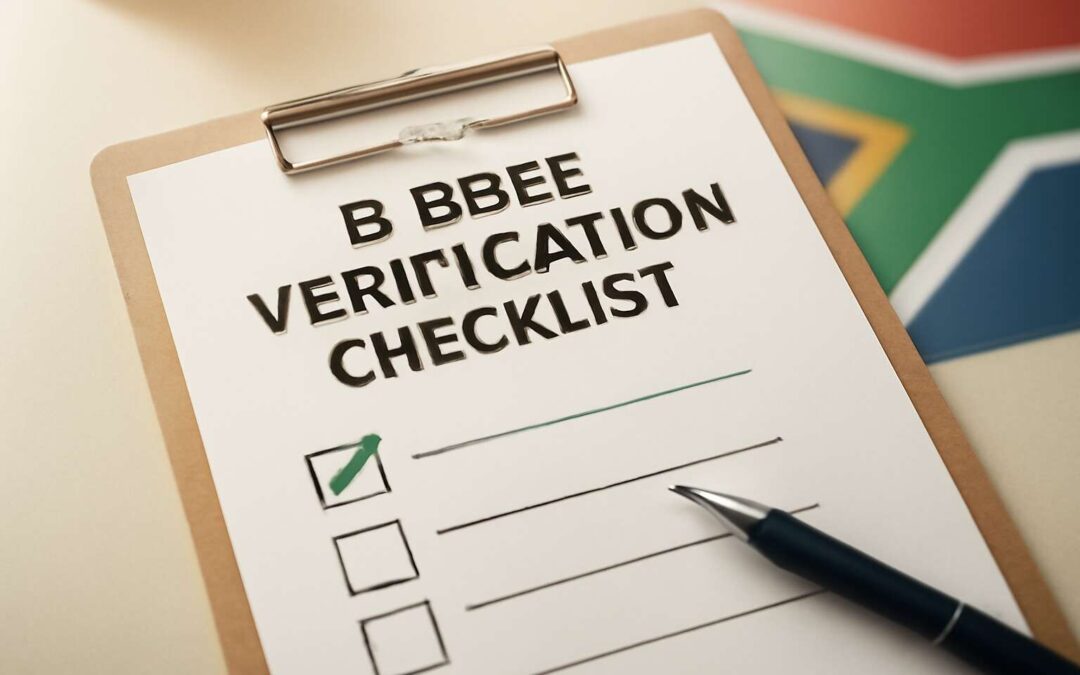
B-BBEE Verification Overview
What is B-BBEE verification
Across South Africa’s business night, the B-BBEE verification journey unfolds like a moonlit corridor—both daunting and strangely clarifying. Industry whispers carry a striking hook: the bbbee verification checklist isn’t a mere form, it’s a compass that reveals where credibility truly lies!
B-BBEE verification is the formal assessment of a company’s empowerment credentials, carried out by accredited verification professionals. It translates governance, skills development, procurement, and enterprise development into measurable ratings that stakeholders can trust—and that doors can open or close based on truth, not rumor!
In practice, the overview highlights the terrain a business must navigate. The key components include:
- Ownership and Control
- Skills Development and Employment Equity
- Procurement and Enterprise Development
- Socio-Economic Development
Who needs verification
In South Africa’s procurement labyrinth, credibility is the gatekeeper. “Credibility is the new currency,” a procurement director notes, and the bbbee verification checklist is the compass. It goes beyond forms, pointing to where doors actually open and where doubt closes them, turning governance and skills into a trust metric buyers rely on.
Who needs verification isn’t a single rule but a practical threshold.
- Companies bidding on public-sector tenders
- Businesses seeking preferential procurement status
- Firms aiming to attract investment or strategic partners
Accredited verification professionals guide this journey, translating policy into a tangible rating that signals reliability to tenders, lenders, and partners. The result is a verifiable credential that unlocks opportunities and sustains business credibility.
Key verification milestones
Trust is the cheapest insurance in South Africa’s procurement maze. The bbbee verification checklist acts as the compass, turning governance data into a clear path from scope to rating. A credible verification signals reliability to tenders, lenders, and partners, making the whole process feel less opaque and more predictable.
- Scoping and planning: align objectives, set data requirements, and assign owners.
- Documentation and data validation: gather records, verify accuracy, and ensure consistency.
- Verification assessment: on-site or remote review of controls and implementation.
- Scoring and rating: finalize the score, issue the certificate, and establish validity.
Accredited verification professionals guide this journey, translating policy into a tangible rating that signals reliability to tenders, lenders, and partners. This bbbee verification checklist approach turns a credential into a competitive edge, unlocking opportunities and sustaining business credibility.
Documentation and Eligibility Requirements
Standard documentation for B-BBEE verification
“Documentation is the passport that unlocks opportunity,” a compliance veteran reminds us. In South Africa’s market, credibility travels on paper, and a clean file often becomes the deciding factor in first impressions.
Standard documentation for B-BBEE verification serves as the backbone of eligibility. It helps to align approach with a bbbee verification checklist, ensuring nothing slips through the cracks. Items should be current, complete, and traceable to the source, demonstrating governance, ownership, and employment practices with transparency.
- Certificate of incorporation or registration
- Tax clearance certificate or PIN
- Most recent financial statements or management accounts
- Ownership and shareholding schedule
- Payroll records, employment equity plans, and skills development reports
Eligibility is a holistic picture rather than a single document; when the file reflects real practices and verifiable data, the verification process flows smoothly. This bbbee verification checklist helps auditors and applicants stay aligned to the numbers that matter.
Eligibility criteria by sector
In the South African market, eligibility isn’t a one-size-fits-all coat. The bbbee verification checklist acts as the tailor, shaping credible practice across sectors.
- Manufacturing: clear ownership and value chain alignment
- Services: payroll governance and employment equity milestones
- Primary Sector: procurement patterns and local supplier uptake
Eligibility criteria by sector demand current, verifiable data and transparent governance. Documentation aligned with sector expectations helps auditors read the file with confidence and prevents misinterpretation. These realities guide what auditors expect during verification across industries.
Keep pace with the numbers that matter, and the process tends to glide rather than grind to a halt.
Common documentation pitfalls
The audit clock ticks, and one misplaced page can unravel the entire fabric. Documentation in the bbbee verification journey becomes a quiet cathedral where every file must ring true. A misplaced date or an out-of-sync owner deed can disturb the entire audit march. The bbbee verification checklist whispers discipline, turning tense folders into transparent testimony.
- Inconsistent entity names across documents
- Outdated payroll and EE records not aligned with the latest sector requirements
- Missing governance signs, or documents with conflicting dates
With careful alignment, what auditors expect emerges from the shadows with clarity, and the verification process can glide.
Digitizing documents and records
Audits move to the cadence of a metronome, and in that rhythm, digitizing documents becomes more than storage—it is a philosophy of clarity. For bbbee verification checklist purposes, clean digital records act as a compass, guiding ownership, payroll, and governance documents into alignment across the file. In South Africa’s varied sectors, this digital discipline translates eligibility criteria into readable, verifiable evidence.
- Consistent metadata and entity naming
- Version-controlled archives with auditable trails
- Accessible formats that meet sector-specific governance needs
A living archive with metadata, version history and accessible formats ensures auditors don’t have to chase dates or signatures. It’s governance with a durable spine, standing up to policy evolution and turning a cautious review into a steady, comprehensible arc.
Verification Process and Methodologies
On-site assessments and interviews
Across South Africa’s diverse business landscapes, verification is not a gate to pass but a story to tell—one that marries numbers with nuance. In the verification process, practitioners map how a company operates, threads of policy, and real-world practice into a coherent portrait. Our approach treats on-site life as a living document, breathing through every corner of the operation.
- On-site assessments align documentation with actual workflow, exposing how controls function in practice.
- Interviews with leaders, managers, and front-line staff illuminate governance, accountability, and day-to-day realities.
- Evidence sampling and observations verify consistency across processes, mitigating risk and strengthening credibility.
Methodologies weave evidence from on-site assessments with interviews, forming a rigorous narrative of how governance travels from policy to practice. This is not guesswork; it lives in the bbbee verification checklist.
Attestation vs. verification: choosing the method
Verification is poetry in motion, not a barrier, and the bbbee verification checklist is the metronome that keeps tempo. In South Africa’s dynamic markets, policy and practice knit together, turning numbers into narrative and audits into assurance.
Attestation vs. verification: choosing the method means weighing independence, scope, and risk.
- Purpose: stakeholder assurance or internal governance.
- Evidence: sufficiency and traceability across functions.
- Independence: external or internal examiner’s objectivity.
Ultimately, the method must align with an organisation’s risk posture and the expectations of the bbbee verification checklist, shaping credibility that travels beyond the desk!
Data collection and scoring criteria
Trust is built in the details, and South Africa’s markets demand that detail to sing. Verification is not a barrier but a choreography, where numbers become narrative and audits transform into assurance—I’ve seen this tempo turn cautious vendors into confident partners!
Data collection and scoring criteria demand breadth and rigor; the bbbee verification checklist translates evidence into a shared score across functions. Consider these foundations:
- Data sources spanning finance, procurement, and human resources with cross-functional traceability
- Triangulation and an auditable trail to prove accuracy and consistency
- Weighted scoring that reflects sector priority and transformation goals
- Clear versioning and change control for all supporting documents
Ultimately, the method must align with an organisation’s risk posture and stakeholder expectations—this is what I believe turns careful verification into lasting credibility that travels beyond the desk.
Timelines and milestones
Time stamps trust: “time equals credibility,” an auditor once quipped. The Verification Process and Methodologies Timelines and milestones behind a bbbee verification checklist turn rigid criteria into a readable journey. Clear schedules stop ambiguity from creeping in and let South Africa’s markets breathe with confidence. When the clock works, data becomes narrative and audits transform into assurance—part caution, part conviction, all practice!
- Planning and scope definition with risk appetite
- Document collection window across finance, procurement, HR
- Fieldwork and interviews to test cross-functional evidence
- Review, reconciliation, and formal sign-off
Aligned milestones keep the process predictable and credible beyond the desk, shaping outcomes that endure in supplier relationships.
Scoring, Measurement, and Outcome
Understanding the B-BBEE scorecard
The B-BBEE scorecard is not a cryptic maze; it’s a weather map where a few well-placed numbers forecast business weather. In SA’s procurement world, a single point on the scorecard can swing multi-million rand contracts. When you speak in points, not vibes, the bbbee verification checklist stops being folklore and starts guiding procurements, partnerships, and reputational spin. Understanding the scoring logic invites clarity.
At its core, measurement boils down to a handful of pivotal elements:
- Elements and weighting breakdown
- Scoring bands, thresholds, and what constitutes a pass
- How the final level translates to procurement leverage
Outcomes hinge on consistency, audit trails, and the ability to demonstrate impact across cycles. A clean scorecard signals reliability to suppliers and partners and keeps the conversation pointed toward genuine value rather than theoretical compliance.
Industry-specific scoring variations
Scoring isn’t a mystery; it’s a clean, auditable tally that translates effort into procurement leverage. Measurement yields traceable, cycle-to-cycle data that proves impact, not intention. When anchored to the bbbee verification checklist, numbers become navigation aids—clear bands, weights, and the final level that compels partnerships and supplier conversations.
Industry-specific scoring variations shape how the checklists are read in practice:
- Public sector focus on enterprise development and audited impact.
- Private sector values governance, risk controls, and demonstrable value.
- Sector nuances—manufacturing, services, or export—shift weights for ownership, skills development, and sustainability.
In short, this dynamic is the heart of the bbbee verification checklist, making scores meaningful across cycles.
Interpreting scores and improvement plans
In 2023, more than 60% of procurement decisions cited the score as a deciding factor, turning measurement into leverage and risk into clarity. The bbbee verification checklist does more than tally points; it turns effort into a navigable map that guides conversations with partners and suppliers.
Scoring, measurement, and outcomes unfold as a cohesive triad:
- Scoring provides auditable bands and weights that translate effort into procurement leverage.
- Measurement delivers cycle-to-cycle data, proving impact rather than intention.
- Outcomes feed improvement plans, mapping how scores translate into measurable performance and credible growth.
Impact on procurement and partnerships
Powerful contracts hinge on auditable scores, not guesswork. The bbbee verification checklist turns effort into a navigable map that sharpens procurement conversations and clarifies risk for partners. Scoring, Measurement, and Outcomes form a cohesive triad that guides how organizations invest, compare vendors, and nurture enduring alliances.
In practice, the triad unfolds as:
- Scoring: auditable bands and weights that translate activity into procurement leverage
- Measurement: cycle-to-cycle data that proves impact, not intention
- Outcomes: improvement plans that map scores to credible growth
Measurement delivers real-time evidence and trendlines; Outcomes translate that evidence into concrete actions. When the trio works together, procurement decisions become transparent conversations with suppliers, opening paths to shared value and sustainable uplift across South Africa’s markets.
Compliance Strategies and Best Practices
Practical steps to improve score
Compliance isn’t a cage of rules; it’s a compass that keeps growth steady and true. In South Africa’s B-BBEE landscape, disciplined governance turns risk into opportunity, elevating credibility with every verified document. The path is illuminated by the bbbee verification checklist, guiding teams from policy to proof with elegance.
Practical steps, embedded as strategies, flow with subtlety: governance aligned with clear accountability, the embrace of digitized evidence, disciplined record-keeping, and a culture of continuous review.
These measures turn fatigue into fluidity, turning data into trust and partners into allies. The result is a posture that withstands scrutiny and seeds sustainable growth.
Pre-assessment checks
Compliance is a lighthouse for growth, not a cage of rules. The bbbee verification checklist acts as a compass, turning pre-assessment into performance. In South Africa’s B-BBEE landscape, disciplined governance translates risk into opportunity and builds credibility with every document you present.
Here are pre-assessment checks to run now:
- Governance alignment and clearly defined accountability across leadership
- Digitized evidence and secure document management to speed verification
- Disciplined record-keeping with version control and access logs
- Culture of continuous review and refresh of policies
These measures turn fatigue into fluidity, making data trustworthy and partnerships stronger. A solid pre-assessment lays the groundwork for a smooth verification journey and sustainable growth across sectors in South Africa.
Governance and ownership considerations
Governance isn’t a cage—it’s a compass. A notable insight from compliance circles suggests that organisations with clearly defined ownership shorten verification cycles by up to 40%. “Compliance is the quiet engine of trust,” notes a seasoned observer.
Compliance strategies and best practices rest on governance and ownership considerations that shape risk posture, policy provenance, and the clarity of decision rights. Key elements include the following:
- Clear leadership accountability for B-BBEE evidence and outcomes
- Secure, auditable ownership of policy documents and scoring data
- Transparent access controls and versioned records with a credible chain of custody
When these strands weave into the bbbee verification checklist, they turn complexity into credibility and speed, a practical, South African response to a changing procurement landscape.
Common mistakes and how to avoid them
Ownership is the compass, not a cage, in the B-BBEE maze. A sturdy beacon gleams when leadership claims responsibility for evidence and outcomes, for it trims verification cycles by up to 40%. “Compliance is the quiet engine of trust,” a seasoned observer remarks, and the truth hums in the margins where governance meets action.
- Treating the bbbee verification checklist as a one-time audit rather than an ongoing governance discipline.
- Weak ownership signals: policy documents and scoring data drift without a single custodian.
- Async access controls and missing audit trails leave provenance unclear.
When the strands of governance and ownership stay taut, compliance strategies translate into credibility and speed on the ground. By fostering accountability, nurturing durable record-keeping, and upholding clear decision rights across teams, organisations breathe life into the verification journey and welcome a steadier path through the procurement shadows.